
How to Plan a Large Outdoor Event in India: Complete Guide to Event Infrastructure
Planning a large outdoor event in India requires more than choosing a venue and arranging decorations. Weather, guest comfort, flooring, lighting, sound, power, air conditioning and event structures all need to work together.
Whether you are organizing a corporate event, exhibition, product launch, wedding, festival, conference or large gathering, the right event infrastructure can make the difference between a smooth experience and an event filled with last-minute problems.
In this guide, we explain the key things you should consider when planning a large outdoor event in India.
Why Is Event Infrastructure Important for Outdoor Events?
An outdoor venue gives you flexibility, but it also comes with challenges that you may not face in a permanent indoor venue.
You need to consider:
Weather and rainfall
Heat and humidity
Uneven ground
Guest capacity
Power requirements
Air conditioning and ventilation
Lighting
Sound systems
Seating and stage requirements
Guest movement
Safety and accessibility
A well-planned event infrastructure setup turns an open space into a comfortable, functional and professionally designed event venue.
1. Choose the Right Event Structure
The event structure is the foundation of your outdoor venue.
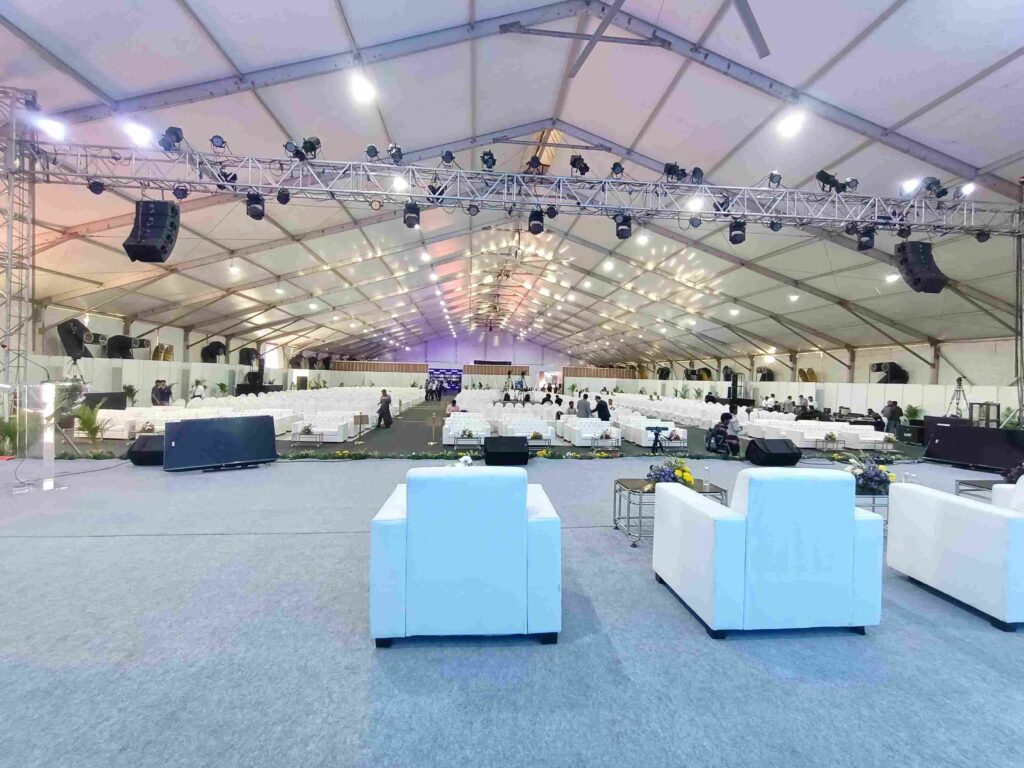
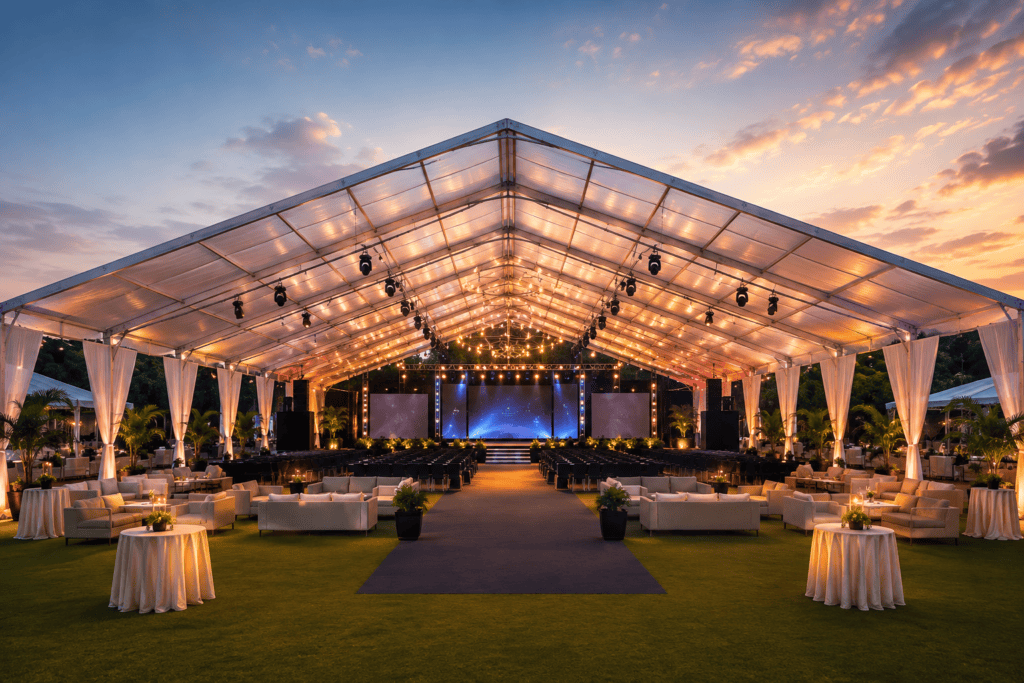
For large gatherings, German Hanger Tents are a popular option because they provide large, open and flexible spaces without traditional internal support pillars obstructing the main event area.
Depending on the event requirements, a German Hanger structure can be combined with:
Event flooring
Air conditioning
Ventilation
Stage systems
Professional lighting
Sound systems
Branding
Draping
Seating arrangements
German Hanger Tents can be suitable for corporate events, exhibitions, weddings, product launches, conferences and other large-scale outdoor events.
Choosing the right structure should depend on the event size, venue, expected weather, seating arrangement and overall event design.
2. Plan for India’s Weather Conditions
Weather is one of the biggest factors to consider when planning an outdoor event in India.
Depending on the location and season, your event may have to deal with high temperatures, heavy rainfall, humidity or strong winds.
Before finalizing the infrastructure, consider:
Expected temperature
Rainfall probability
Wind conditions
Sun exposure
Ground conditions
Event duration
Number of guests
Time of day
For monsoon events, proper waterproofing, drainage and ground preparation are important.
For summer events, event cooling and climate control should be planned from the beginning.
The objective is to create an event environment that remains comfortable even when outdoor weather conditions change.
3. Plan Event AC and Climate Control
Guest comfort is one of the most important aspects of a large outdoor event.
A temporary event structure can become uncomfortable when temperatures rise, especially when hundreds or thousands of people are inside.
Professional event AC and climate-control solutions can help maintain a comfortable environment.
Depending on the event structure and requirements, cooling solutions may include:
Tower AC
Duct AC
Split AC systems
Air distribution systems
Ventilation solutions
Customized climate-control systems
The right cooling system depends on several factors, including:
Venue size + structure height + guest capacity + outdoor temperature + equipment load + event duration
This is why cooling requirements should be assessed before installation rather than arranged at the last minute.
4. Select the Right Event Flooring
An outdoor venue may not naturally provide the flat and stable surface required for a professional event.
Uneven ground can create problems for:
Guests
Furniture
Stages
Exhibitions
Catering equipment
Audio-visual equipment
Event staff
Professional event flooring can create a more stable and finished surface while also improving the overall appearance of the venue.
Depending on the event, flooring options can include:
Wooden platforms
Carpet flooring
Exhibition flooring
Heavy-duty platforms
Stage flooring
Dance flooring
Weather-resistant flooring
Flooring should be planned together with the event structure, stage and seating layout.
5. Create the Right Lighting Design
Lighting has two important functions at an event: visibility and atmosphere.
For a large outdoor event, lighting may be required for:
Main stage
Guest seating
Entrance
Walkways
Dining areas
Exhibition areas
Branding zones
Backstage areas
Parking and access points
Corporate events generally require clean and professional lighting, while weddings and entertainment events may use decorative and dynamic lighting to create a particular atmosphere.
A good lighting plan should be based on the event layout rather than simply adding lights wherever space is available.
6. Plan Your Sound System According to the Venue
A professional sound system is essential for conferences, corporate events, weddings, product launches, exhibitions and entertainment programs.
The sound setup should consider:
Venue dimensions
Number of guests
Seating arrangement
Stage size
Type of event
Microphone requirements
Music and entertainment
Indoor or outdoor conditions
For corporate events and conferences, speech clarity is especially important.
For entertainment events, the system needs to provide consistent sound coverage throughout the audience area.
Sound testing before the event begins can help identify issues with microphones, speakers, cables and audio levels before guests arrive.
7. Don’t Forget Event Branding and Décor
An outdoor structure provides the venue, but branding and décor create the identity of the event.
For corporate events and product launches, branding can include:
Entrance branding
Stage backdrops
Branding walls
Directional signage
Printed graphics
Exhibition partitions
Fabric draping
Sponsor branding
For weddings and social events, décor may include floral arrangements, decorative lighting, draping and customized seating areas.
The best results come when branding and décor are planned together with the structure, lighting and stage.
8. Integrate All Event Infrastructure
One of the most common challenges in large events is coordinating multiple vendors.
You may have:
One company handling the tent
Another handling AC
Another handling flooring
Another handling lighting
Another handling sound
Another handling branding
When these services are planned independently, coordination can become difficult.
An integrated approach allows the major infrastructure components to be planned together.
For example, the event structure needs to accommodate the cooling system, lighting and sound. Flooring needs to be considered before stages and furniture are installed.
A single event infrastructure partner can help simplify communication, planning and execution.
9. Conduct a Detailed Site Assessment
Before installing the event infrastructure, the venue should be assessed properly.
Important considerations include:
Ground Conditions
Check whether the ground is suitable for structures, flooring, stages and guest movement.
Access
Determine how installation vehicles, equipment and materials will enter and exit the venue.
Power
Assess the available electrical supply and determine the requirements for AC, lighting, sound and other equipment.
Drainage
For outdoor events, drainage is particularly important during the monsoon season.
Guest Movement
Plan entrances, exits, seating areas, dining zones, washrooms and emergency access.
Equipment Placement
Decide where AC units, sound equipment, electrical equipment and other infrastructure will be positioned.
A detailed site assessment can help identify potential problems before installation begins.
10. Plan the Event Infrastructure Timeline
Large outdoor events require proper preparation.
Your planning timeline should include:
Site inspection → Event design → Structure planning → Flooring → Electrical planning → AC and climate control → Lighting and sound → Branding → Final inspection → Event execution → Dismantling
The exact timeline depends on the size and complexity of the event.
Large structures and complex installations should be planned well in advance to allow sufficient time for engineering, logistics, installation and testing.
11. Choose an Experienced Event Infrastructure Partner
The technical infrastructure behind an event may not be noticed when everything works correctly.
However, guests immediately notice problems such as:
Excessive heat
Poor ventilation
Unstable flooring
Insufficient lighting
Poor sound quality
Difficult access
Weather-related issues
When selecting an event infrastructure company, look beyond the rental price.
Consider whether the company can provide:
Event structures
German Hanger Tents
Pagoda Tents
Event AC and climate control
Event flooring
Lighting
Sound systems
Branding and draping
Site assessment
Installation
On-site technical support
Dismantling
An experienced infrastructure partner should understand how these different elements work together.
Complete Outdoor Event Infrastructure Checklist
Before finalizing your event setup, make sure you have considered:
☑ Event structure
☑ Venue and ground conditions
☑ Weather protection
☑ Guest capacity
☑ Event AC and cooling
☑ Ventilation
☑ Event flooring
☑ Stage
☑ Lighting
☑ Sound system
☑ Power requirements
☑ Branding and décor
☑ Seating arrangement
☑ Guest entrances and exits
☑ Emergency access
☑ Installation timeline
☑ On-site support
☑ Dismantling
How Airoshelt Can Help
Airoshelt provides event infrastructure solutions designed for large-scale events, including German Hanger Tents, Pagoda Tents, event AC and climate control, flooring, lighting, sound, draping and branding.
By combining multiple infrastructure requirements, Airoshelt helps event organizers create temporary event venues that are designed around comfort, functionality and presentation.
Whether you are planning a corporate event, exhibition, wedding, conference, product launch or large outdoor gathering, the infrastructure should be planned according to the venue, event requirements and expected guest experience.
Final Thoughts
Planning a large outdoor event in India requires careful attention to both visible and invisible details.
The tent may be the first thing guests notice, but temperature, flooring, lighting, sound, accessibility and overall comfort determine how they experience the venue.
The best approach is to plan the complete event infrastructure from the beginning instead of arranging individual requirements at the last minute.
With the right combination of German Hanger Tents, event flooring, climate control, lighting, sound and professional installation, an empty outdoor space can be transformed into a comfortable and professionally designed event venue.
Planning a Large Outdoor Event?
If you are looking for event infrastructure solutions in India, Airoshelt can help you plan the structure, cooling, flooring, lighting, sound and other technical requirements for your event.
Contact Airoshelt to discuss your venue, guest capacity and event requirements and create a customized infrastructure plan.